US-UK Economic Prosperity Deal Signs Amid Tariff Uncertainty and Digital Stalemate
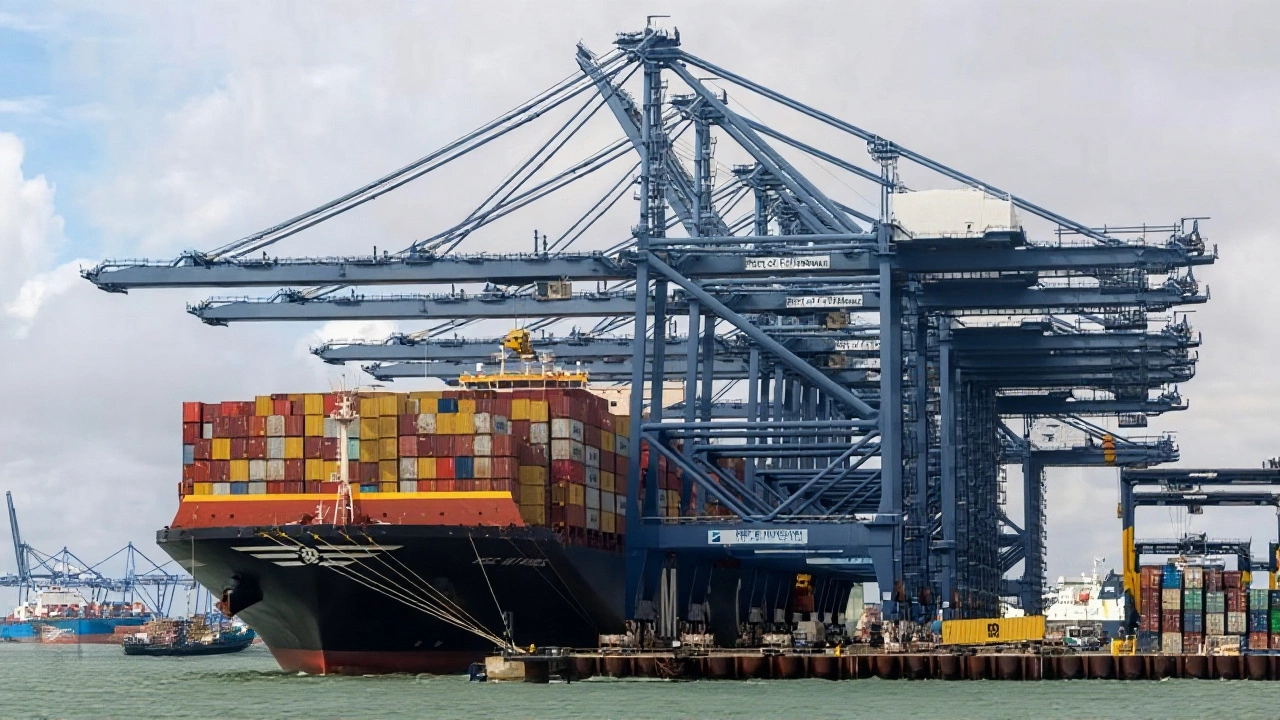 Nov, 28 2025
On June 16, 2025, the G7 summit Canada became the stage for a landmark but fragile trade agreement: the US-UK Economic Prosperity Deal (EPD). Signed by Donald J. Trump and Keir Starmer, the deal promised sweeping tariff cuts — but left critical questions hanging, especially over steel, aluminum, and digital taxes. The announcement, first floated on May 8, 2025, was meant to signal a new era of transatlantic cooperation. But behind the handshakes and press releases, the reality is far more complicated. The U.S. still imposes a 50% tariff on steel and aluminum from most nations — yet the UK, for now, is stuck at 25%. And even that lifeline might vanish if the deal isn’t fully ratified by July 9, 2025.
Automotive and Aerospace Wins — With Limits
The clearest victories in the EPD came in manufacturing. U.S. automakers will now face just a 10% tariff on up to 100,000 British-built cars each year, down from 27.5%. Beyond that quota? A punishing 25% tariff on top of the standard Most Favored Nation rate. It’s a win for Jaguar, Land Rover, and Mini — but only if they stay under the cap. Meanwhile, the U.S. eliminated its 10% tariff on UK-made aerospace components, including engines and avionics, under the World Trade Organization Agreement on Trade in Civil Aircraft. That’s a major relief for Rolls-Royce and BAE Systems, whose supply chains rely heavily on U.S. parts.Agriculture: Beef and Ethanol Open the Door
On the farm front, the UK made major concessions. It agreed to eliminate its 20% tariff on U.S. beef exports within a 1,000-metric-ton quota — and create a preferential, duty-free quota of 13,000 metric tons. That’s a huge opening for Midwestern ranchers, especially as U.S. beef prices have been volatile since early 2024. Even more surprising? The UK will allow 1.4 billion liters of U.S. ethanol to enter tariff-free annually — up from a previous 19% duty. That’s a direct shot at European biofuel producers and a win for American corn growers. According to the U.S. Trade Representative (USTR), these agricultural changes alone could unlock $1.2 billion in new U.S. exports.Steel and Aluminum: A Deal on Paper, Not in Practice
Here’s where things get shaky. The White House claimed the UK was spared from the 50% steel and aluminum tariffs imposed globally on June 3, 2025. But reports from London’s Financial Times and The Guardian suggest the exemption is effectively on hold. The U.S. demanded that all UK steel exports be “melted and poured” on British soil — a rule meant to block Chinese steel from being rerouted through the UK. But British steelmakers, already struggling after decades of underinvestment, say they can’t meet the volume or purity standards required. “We’re being asked to compete with a ghost,” said one senior executive at Tata Steel UK, speaking anonymously. The Center for Strategic and International Studies (CSIS) noted that this provision has been “put on hold indefinitely,” though the U.S. still insists the 25% rate remains conditional. President Trump’s June 17 executive order gave no immediate relief — only the vague promise of a tariff-rate quota (TRQ) “at a future date.”
Digital Services Tax: The Unresolved Elephant
While trade in goods moved forward, digital trade stalled. The U.S. has long accused the UK’s 2% Digital Services Tax (DST) of unfairly targeting American tech giants like Google, Meta, and Amazon. The U.S. Trade Representative called the DST “discriminatory, unjustified, and should be removed promptly.” The UK, however, refused to budge — citing revenue needs and the need to protect its own digital startups. The Economics Observatory estimates that if the DST were scrapped, U.S. tech firms could save up to £400 million annually in UK taxes. But for now, both sides agreed only to “continue discussions.” Treasury Secretary Scott Bessent has set early September 2025 as a target for finalizing digital provisions — but with no leverage on the table, progress seems unlikely.What Comes Next? Approval, Uncertainty, and Timing
The EPD isn’t law yet. It requires approval from both the U.S. Congress and the UK Parliament — and neither body is eager to rubber-stamp it. In the House of Commons, Labour backbenchers are already raising concerns over beef imports and food standards. In Washington, Republicans are pushing to link the deal to broader supply chain reforms, while Democrats are wary of weakening labor and environmental protections. The clock is ticking: unless the full deal is ratified by July 9, 2025, the UK’s steel and aluminum tariff carve-out vanishes. That’s less than 60 days from now. And with the U.S. election looming in November, political capital is scarce.
Why This Matters Beyond Trade Numbers
This isn’t just about tariffs or quotas. It’s about trust. After Brexit, the UK has struggled to rebuild its global trade identity. The EPD was supposed to be its crown jewel — proof that it could strike bold deals outside the EU. But the deal’s uneven terms, the backtracking on steel, and the digital impasse reveal a deeper truth: the U.S. is treating the UK not as an equal partner, but as a tactical bargaining chip. Meanwhile, the UK’s concessions on agriculture and digital taxes may alienate farmers and tech regulators at home. The $5 billion in projected U.S. export gains sound impressive — but what’s the real cost to British consumers, workers, and sovereignty?Frequently Asked Questions
How does the EPD affect UK steelworkers?
The deal offers no guaranteed protection for UK steelworkers. While the U.S. temporarily maintains a 25% tariff (instead of 50%), the requirement that steel be "melted and poured" in Britain is unworkable for most UK mills, which lack the capacity to process high-grade ore. Reports indicate this clause is on hold — meaning steelworkers face long-term uncertainty, not relief.
Why did the UK agree to more U.S. beef and ethanol?
The UK traded agricultural access for gains in autos and aerospace — sectors where it has stronger global competitiveness. Beef and ethanol imports are politically sensitive, but the government hopes to offset domestic backlash with job gains in manufacturing. Still, farming groups warn the 13,000-metric-ton beef quota could undercut British producers already struggling with post-Brexit costs.
What happens if the EPD isn’t approved by July 9, 2025?
The UK’s 25% tariff exemption on steel and aluminum will expire, and those imports will jump to the U.S. standard rate of 50%. That could cost British exporters over $300 million annually. Automotive and aerospace benefits may still proceed, but the deal’s credibility would collapse — and the U.S. would likely demand even tougher terms in any future negotiations.
Is the UK getting a fair deal compared to the EU?
No. The EU maintains a 10% tariff on U.S. cars and a 2.5% tariff on steel — far lower than the UK’s new 25% steel rate. The UK also granted broader access to U.S. beef and ethanol than the EU ever did. In return, the UK received no equivalent concessions on U.S. agricultural subsidies or digital market access, making the deal appear asymmetrical.
Will this deal lower prices for UK consumers?
Not noticeably. Most of the tariff cuts apply to industrial inputs (like auto parts and aircraft components), not consumer goods. While U.S. beef and ethanol may become slightly cheaper, the overall impact on grocery or fuel bills is minimal. The real beneficiaries are large corporations — not households.
What’s the next big hurdle in the EPD?
Pharmaceuticals. The U.S. wants faster approval for American drugs in the UK’s NHS, while the UK seeks to protect its price controls. Talks are ongoing, but without resolution, the full EPD can’t be finalized. This is the next flashpoint — and it could delay ratification into late 2025 or beyond.